Intracoastal vs Oceanfront: Choosing Your West Palm Beach View
December 18, 2025
December 18, 2025
Are you torn between the calm elegance of the Intracoastal and the drama of the Atlantic? In West Palm Beach and Palm Beach Island, that choice shapes your daily routine, your boating plans, and your long-term costs. You want a view that fits your lifestyle and a property that holds value. This guide breaks down the real differences so you can buy with clarity and confidence. Let’s dive in.
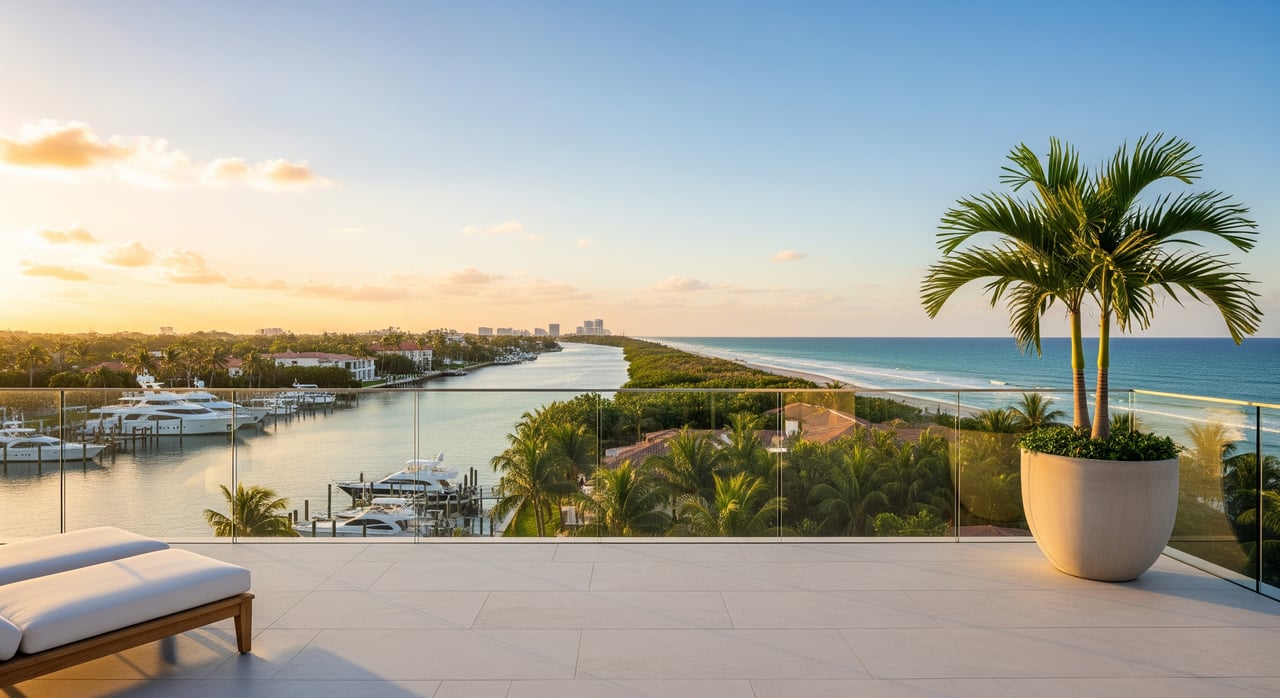
The Lake Worth Lagoon, part of the Intracoastal Waterway, separates West Palm Beach from Palm Beach Island. Intracoastal homes look across protected water, marinas, and landscaped shorelines. Oceanfront homes face the open Atlantic with uninterrupted horizons and sunrise light.
The Lake Worth Inlet links the Lagoon to the ocean. If you boat offshore or to the Gulf Stream, proximity to the inlet matters. Around the inlet and along the ICW, you’ll find most fuel docks and deepwater marinas.
You get calmer water, easier docking, and relaxed outdoor spaces. For many owners along Flagler Drive and SoSo, daily life means quick morning cruises, sunset cocktails on the dock, and a few minutes to downtown dining and cultural events.
Views feel intimate and active. You watch boats, birds, and lights across the water. Outdoor living areas are more sheltered, with less constant wind than the beach.
For boaters, small-to-medium vessels are straightforward to manage on the Lagoon. Still, confirm channel depth from your dock to the inlet, and consider bridge clearances if you run a sailboat or tall flybridge.
The Atlantic gives you unmatched, panoramic horizons and sunrise light that sells condos and estates alike. You hear the surf, step onto the sand, and capture that iconic Palm Beach image every day. On the island, walkability to shops and dining can be excellent in select areas.
Expect stronger breezes and more salt spray. Outdoor furniture, railings, and exterior finishes will need more frequent care. Many oceanfront homes do not have deepwater docks; serious boating often relies on nearby marinas.
Intracoastal docks typically offer easier daily use and safer conditions for family boating. Water depth varies by lot, so measure at mean low water and confirm navigation routes. Shoaling can change channels, and some areas rely on periodic dredging.
If offshore runs are your priority, the Lake Worth Inlet shortens your time to blue water. Always check tide and wind, and know bridge heights and opening schedules for your vessel. Regulatory permits govern docks, seawalls, and dredging. For guidance on coastal work, review the U.S. Army Corps of Engineers permitting guidance before you plan improvements.
Salt air accelerates corrosion. Impact windows, quality coatings, and diligent upkeep protect value. Oceanfront properties sit in the highest wind and spray, so you’ll schedule exterior maintenance more often than on the Lagoon.
On the Intracoastal, seawalls and docks are the critical assets. Condition, material, and permit history affect safety and resale. On the ocean, dune health and beach nourishment programs influence stability. To understand local nourishment and beach management, explore the Florida Department of Environmental Protection’s beach management program.
Both oceanfront and Intracoastal homes may sit in FEMA flood zones. Get an elevation certificate early and a current flood and wind quote before you make an offer. You can confirm flood zones using the FEMA Flood Map Service Center.
Insurance pricing reflects building age, elevation, mitigation features, and distance to open water. Impact-rated openings, roof tie-downs, and elevated structures can help. Permits for seawalls, docks, dune work, and shoreline vegetation often involve multiple agencies. Island owners should review the Town of Palm Beach for building and coastal rules. Mainland owners can refer to the City of West Palm Beach Building Division for dock and shoreline guidance. County-wide building standards and permit records are available through the Palm Beach County Building Division.
Scarcity sets the tone. Oceanfront parcels on Palm Beach Island are limited, and the best lines command premiums. Intracoastal homes with deep lots, updated structures, and quality docks also trade at a premium, especially in sought-after corridors like Flagler Drive.
For condos, oceanfront buildings attract buyers for views and amenities, but association dues and maintenance of coastal structures can be higher. For single-family homes, dock quality, seawall condition, and legal access are major resale drivers. Across both, buyers weigh insurance history, elevation, and the perceived resilience of the property.
Consider view permanence. Oceanfront sightlines are rarely interrupted, while Intracoastal views can be affected by future development or vegetation. Association reserves and pending assessments matter for condos and planned communities.
Ask yourself:
Site and elevation
Shoreline structures
Permits and rules
Insurance and finance
Boating and navigation
Specialists
Choosing between the Intracoastal and the ocean comes down to how you live day to day and how you plan to use the water. If you want calmer outdoor spaces, convenient docking, and quick access to downtown, Intracoastal may be ideal. If you want horizon, sunrise, and the beach at your doorstep, oceanfront can be worth the extra maintenance and insurance. If you would like a private, data-driven comparison for specific addresses on Palm Beach Island or along Flagler Drive, reach out to Samantha Curry for a confidential consultation.
Stay up to date on the latest real estate trends.
September 17, 2026
September 10, 2026
September 3, 2026
August 27, 2026
August 20, 2026

August 13, 2026
August 13, 2026
August 6, 2026
July 23, 2026